
Water Pooling Under Your Fridge? The Usual Culprits
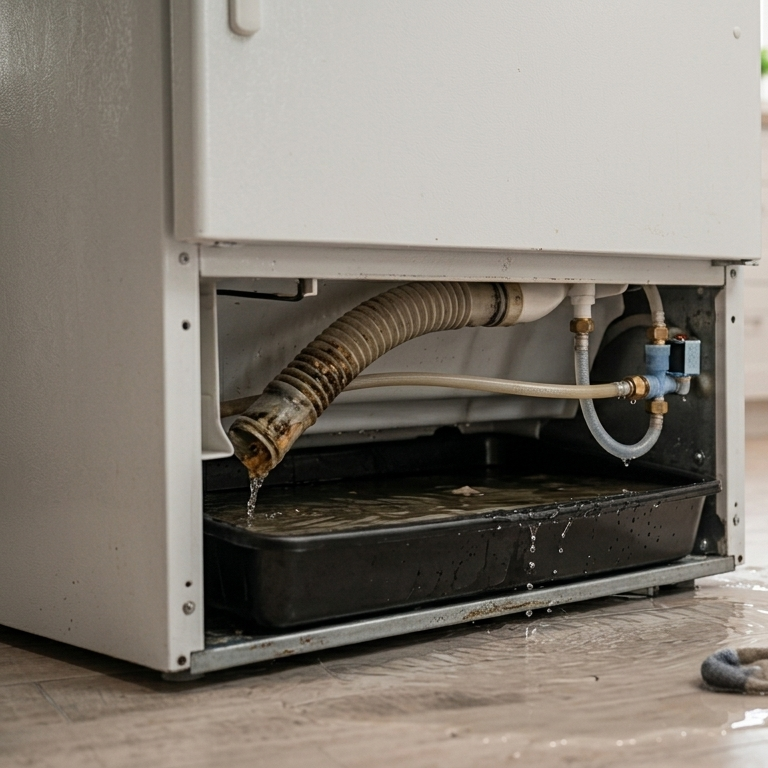
Quick Answer: Water pooling under a refrigerator most often comes from a clogged defrost drain (the number-one cause), a cracked or overflowing drain pan, or a leak in the water line that feeds the ice maker and dispenser. A clogged defrost drain backs up melt water until it spills out; a damaged drain pan lets normal condensation escape; a water-line leak drips steadily. Find the source by checking whether the water is inside the freezer too (defrost drain), under the unit only (drain pan), or near the water-line connection (line leak). Some are DIY; line and sealed-system issues need a pro.
You step into the kitchen in socks and feel it before you see it — a cold puddle creeping out from under the refrigerator. Water where it shouldn't be is unsettling, partly because a fridge has several possible places it can come from, and partly because standing water can warp flooring and breed mold if it's ignored. The reassuring part is that the source usually narrows down quickly once you know what to look for, and the most common cause is also one of the more fixable ones.
Where a Fridge's Water Actually Comes From
A refrigerator handles water in a few ways: it produces condensation and defrost melt that's supposed to drain away and evaporate, and (if it has an ice maker or dispenser) it's connected to a household water line. A puddle means water is escaping one of those systems instead of going where it should. So finding the source is about figuring out which water system is leaking — the defrost drainage, the collection pan, or the supply line. Each leaves its own clues.
The Most Common Cause: A Clogged Defrost Drain
Every frost-free refrigerator periodically melts the frost off its evaporator coils, and that melt water is supposed to run down a small drain channel into a pan underneath, where it evaporates. The trouble is that this defrost drain can clog — with food particles, ice, or gunk — and when it does, the melt water has nowhere to go. It backs up, often freezing into a sheet at the bottom of the freezer, then overflows and runs out onto the floor.
This is the single most common reason for water under a fridge. The telltale sign is water or ice inside the freezer or fridge compartment (especially pooling under the crisper drawers or in the bottom of the freezer) in addition to the puddle outside. Clearing a clogged defrost drain is sometimes a DIY job — flushing the drain channel — though a technician can resolve a stubborn one and confirm the defrost system is otherwise healthy.
The Drain Pan: Full, Cracked, or Misplaced
All that condensation and defrost water ends up in a drain pan (sometimes called a drip pan) underneath the refrigerator, where it's meant to evaporate. A few things go wrong here: the pan can crack and leak, it can be knocked out of position, so water misses it, or in very humid conditions, it can simply receive more water than it can evaporate and overflow. A hot, humid climate makes the overflow scenario more likely, since the fridge sheds more condensation.
A pan problem typically shows up as water under the unit with no water inside the compartments. Checking the pan — accessible from the back or front bottom on most models — can reveal a crack or an overfull pan.
A Water-Line Leak
If your refrigerator has an ice maker or water dispenser, it's connected to a water supply line, and that connection can leak. A loose fitting, a cracked plastic line, or a failing valve can drip steadily, and because the line runs to the back of the fridge, the water often appears toward the rear or along the side. Hard water, common in East Tennessee, can be tough on these lines and fittings over time.
A water-line leak is distinct because it can produce a steady, ongoing puddle unrelated to the defrost cycle, and it may be worse when the ice maker is filling. Some line connections are a DIY tightening; a cracked line or failed valve needs replacement.
| Where the water is | Likely source | Notes |
|---|---|---|
| Ice/water inside freezer + floor puddle | Clogged defrost drain | Most common; flush the drain |
| Under the unit only, none inside | Drain pan cracked or overflowing | Check/replace the pan |
| Near the rear water connection | Water-line or valve leak | Tighten or replace the line |
| Steady puddle, worse when ice maker fills | Supply line/inlet valve | Often needs a part replaced |
Before mopping up, note exactly where the water is — inside the freezer, only under the unit, or near the back water line. That single observation usually identifies the source faster than any other step, and it tells you (and a technician) where to focus.
What to Do About It
Start by locating the source using the clues above, then deal with the water itself promptly — standing water under a fridge can damage flooring and lead to mold, so it's worth drying it up and addressing it rather than leaving it. For a clogged defrost drain or a misplaced drain pan, a careful homeowner can often handle the fix. For a cracked pan or a water-line problem, replacement parts are involved, and for anything touching the sealed cooling system, a technician is the right call.
If you can't pin down the source, the puddle keeps returning, or there's any sign the leak is reaching cabinets or subfloor, bringing in an appliance technician saves you from chasing it and from the water damage that comes with letting it persist. They can confirm the cause, clear or replace what's needed, and make sure it's actually resolved.
Frequently Asked Questions
A clogged defrost drain is the most common cause. Frost-free fridges melt frost off their coils periodically, and that water normally drains into a pan to evaporate. When the drain clogs with food debris or ice, the water backs up and eventually overflows onto the floor. The giveaway is finding water or ice inside the freezer or under the crisper drawers, along with the puddle outside.
The leak itself is usually fixable, but the standing water can become a serious problem if ignored. Water under and around a refrigerator can warp and damage flooring, seep into cabinets and subfloor, and create conditions for mold growth. So while the underlying cause is often simple to address, it's worth acting promptly to find the source and dry the area rather than letting the puddle persist.
Often, yes. Clearing a clogged defrost drain — flushing the drain channel to remove the food debris or ice blocking it — is a task a careful homeowner can sometimes handle. Even so, a stubborn clog, recurring backups, or uncertainty about the defrost system are good reasons to call a technician, who can thoroughly clear it and confirm that the defrost components are working as they should.
The drain pan collects condensation and defrost water to evaporate, and it can overflow if it's cracked, knocked out of position, or simply receiving more water than it can evaporate. Hot, humid conditions increase the amount of condensation a fridge produces, making overflow more likely. If you find water under the unit but none inside the compartments, a cracked or overfull pan is a likely suspect worth checking.
A water-line leak tends to produce a steady puddle, often toward the back or side where the supply line connects, and it may worsen when the ice maker is filling — unrelated to the defrost cycle. It comes from the line that feeds the ice maker and dispenser, where a loose fitting, cracked line, or failing valve can drip. Hard water can wear these parts over time. Tightening may help, but cracked lines or valves need replacement.
Find the Source, Then Stop the Water
Water pooling under your refrigerator is most often one of three things: a clogged defrost drain backing up (the usual culprit, with telltale ice inside), a cracked or overflowing drain pan, or a leak in the water line feeding the ice maker. The fastest way to diagnose it is to notice where the water is — inside the freezer, only underneath, or near the rear connection. Some fixes are DIY; others need a technician. Either way, address it promptly, because the puddle does more damage the longer it sits.
Puddle under your fridge that keeps coming back? — Get the source found and fixed by certified local technicians before it damages your floor. True Appliance Services Inc. serves Maryville, Alcoa, Knoxville. Call (865) 205-8717.
