
Why Your Fridge Won’t Cool Even Though the Light Works
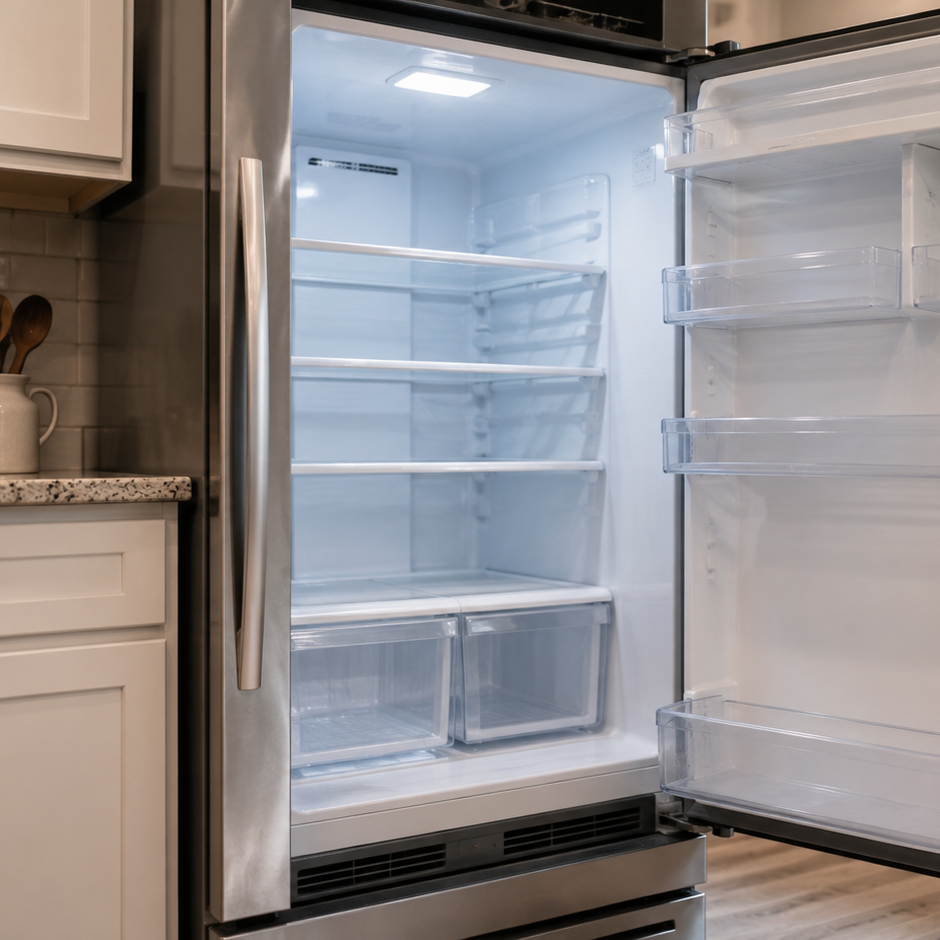
You open the fridge; the light comes on as usual, but the milk is warm, and the air inside feels like the room. It's a confusing situation because the light makes it look like everything's fine. That light is actually your first clue: it means the refrigerator has power. So whatever's wrong isn't the outlet or the cord — it's somewhere in the system that makes it cold, and that narrows things down considerably.
Quick Answer: When the light works but the fridge won't cool, you have power — so the problem is in the cooling system, not the outlet. The most common causes are dirty condenser coils, blocked airflow from the freezer, a failed evaporator fan, dusty or frosted-over components, a bad start relay or compressor, or a temperature/control issue. Start with the easy checks: make sure it's not overpacked, the vents aren't blocked, and the coils aren't caked in dust. If those are clear and it still won't cool, the fan, relay, or compressor may have failed — which calls for a technician.
The Light Means Power — So Look at the Cooling System
A refrigerator does two separate things: it runs a light and controls when the door's open, and it runs a cooling system that pulls heat out of the box. Those are powered by the same electricity but are otherwise unrelated. When the light works but nothing's cold, you've confirmed power is reaching the unit, and the simplest explanations (unplugged cord, dead outlet, tripped breaker) are off the table. The fault lives in the cooling chain — the coils, fans, airflow, and compressor that together make the cold. That's where to look.
Start With the Simple Causes
Dirty Condenser Coils
This is one of the most common and most overlooked causes. The condenser coils — usually on the back or underneath the fridge — release the heat the refrigerator removes from inside. When they're caked in dust, pet hair, and grime, they can't shed heat efficiently, so the fridge struggles to cool even though it's running. Coils that haven't been cleaned in years are a frequent culprit, and cleaning them is something a homeowner can do.
Blocked Airflow and Vents
Cold air has to circulate. In most refrigerators, the cold is actually generated in the freezer section and blown into the fridge compartment through vents. If those vents are blocked by packed-in food, or if the fridge is so full that air can't move, the fridge compartment won't cool properly, even while the freezer stays cold. Overpacking and blocked vents are easy to overlook and easy to fix.
Bad Door Seals or a Warm Location
If the door gasket is worn or not sealing, warm room air leaks in continuously, and the fridge can't keep up — a particular problem in a hot, humid environment. Similarly, a fridge crammed against a wall or near a heat source can't shed heat well. These are simple things worth checking before assuming a major failure.
The More Serious Causes
A Failed Evaporator Fan
The evaporator fan blows air over the cold evaporator coils (in the freezer area) and circulates it into the fridge. If that fan fails, cold isn't distributed — you may find the freezer still somewhat cold, but the fridge warm. A common sign is the fridge not cooling while the freezer does. A failed fan needs replacement.
Frost Buildup on the Evaporator Coils
If the defrost system fails, frost and ice build up on the evaporator coils until air can't pass over them, and cooling drops off. This often shows as a fridge that cooled fine, then gradually got warmer, sometimes with visible frost in the freezer. It points to a defrost component failure that a technician diagnoses.
A Bad Start Relay or Failed Compressor
The compressor is the heart of the cooling system, and the start relay tells it to run. If the relay fails, the compressor won't start; if the compressor itself fails, there's no cooling at all, even though everything's powered. You might hear clicking (the relay trying and failing) or unusual silence where the compressor's hum should be. These are the most serious causes and require professional repair.
| What you notice | Likely cause | DIY or pro |
|---|---|---|
| Fridge running, coils dusty | Dirty condenser coils | DIY — clean the coils |
| Fridge full, air not circulating | Blocked vents/overpacked | DIY — clear vents |
| Warm air leaking, worn gasket | Bad door seal | DIY check / pro replace |
| Freezer cold but fridge warm | Failed evaporator fan | Pro |
| Gradually warmed, frost in freezer | Defrost/frost buildup | Pro |
| Clicking or silent, no cooling | Start relay or compressor | Pro |
Listen and feel before you call. A faint hum and warm coils mean the compressor is running (think coils/airflow). Repeated clicking every few minutes, or total silence where a hum should be, points toward the start relay or compressor — useful information for a repair technician.
What to Check and When to Call
A homeowner can safely handle the simple end: pull the fridge out and vacuum the condenser coils, make sure the unit isn't overpacked and the vents aren't blocked, check that the door seals properly, and confirm the temperature settings haven't been bumped. These resolve a meaningful share of "won't cool" cases, especially dirty coils.
If the coils are clean, airflow is good, and it still won't cool, particularly if the freezer is cold, but the fridge is warm, there's frost buildup, or you hear clicking or silence from the compressor, the problem is a failed fan, defrost component, relay, or compressor. Those involve sealed systems and electrical components that call for a qualified appliance technician. Because a warm fridge means food at risk, it's worth addressing promptly.
Frequently Asked Questions
This common pattern usually points to an airflow problem — most often a failed evaporator fan that's supposed to move cold air from the freezer into the fridge compartment, or frost buildup on the evaporator coils blocking airflow. Since the cold is generated near the freezer, the freezer can stay cold while the fridge warms up. Both causes typically require a technician to diagnose and repair the fan or defrost system.
Yes. The condenser coils release the heat pulled from inside the fridge, and when they're coated in dust and pet hair, they can't shed that heat efficiently, so the refrigerator runs constantly but struggles to cool. Dirty coils are one of the most common and overlooked causes. Cleaning them — usually on the back or underneath — is a simple maintenance task that can restore cooling on its own.
No, the working light confirms the fridge has power, so the outlet, cord, and breaker are fine. The problem is in the cooling system instead — the coils, airflow, fans, or compressor. That's actually helpful, because it rules out the electrical-supply causes and points you toward cleaning the coils and checking airflow first, then to the fan, relay, or compressor if those don't fix it.
A failed compressor usually means no cooling at all, even when the fridge has power. You may notice an unusual silence where the compressor's hum should be, or repeated clicking as the start relay tries and fails. Compressor and relay diagnosis requires a technician with the right tools, since these are sealed systems and electrical components. If the simple causes are ruled out and there's no cooling, the compressor or relay is a prime suspect.
It depends on the cause and the appliance's age. Simple issues like dirty coils, blocked vents, or a bad fan are usually well worth repairing. A failed compressor on an older fridge is a bigger decision that comes down to the appliance's age and overall condition. An honest technician can tell you what's wrong and whether repair or replacement makes more sense for your situation.
The Light Points You Past the Outlet
When the fridge light works, but nothing's cold, you've already learned something useful: it has power, so the trouble is in the cooling system. Start with the simple, DIY-friendly causes — dirty condenser coils, blocked vents, an overpacked box, a bad door seal — because they're common and fixable. If cooling still doesn't return, especially with a cold freezer and warm fridge, frost buildup, or compressor clicking, the failure is mechanical and calls for a technician. Move quickly, since a warm fridge puts your food on the clock.
Fridge running but not cooling? — Get a fast, honest diagnosis and repair from certified local technicians before your food spoils. True Appliance Services Inc. serves Maryville, Alcoa, Knoxville. Call (865) 205-8717.
