
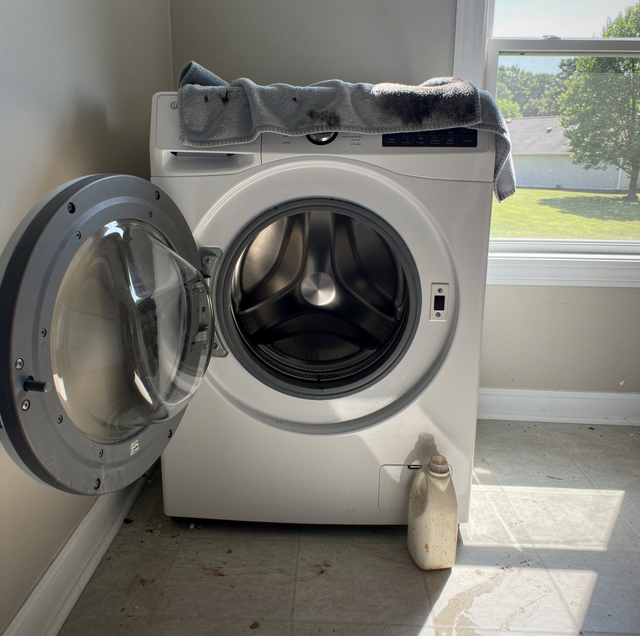
You are standing in the appliance aisle, or maybe just staring at your own aging machine, asking the question every homeowner eventually asks: does a front-load washer really wear out faster than a top-load one, or is that just something people repeat without checking it? The honest answer is that both designs fail, just in different places and for different reasons, and knowing which parts carry the load on each one tells you a lot more than a blanket recommendation ever could.
How Each Design Actually Moves Your Laundry
A front-load washer spins its drum on a horizontal axis, the same way a clothes dryer does, and cleans by lifting clothes up and letting them fall through a shallow pool of water dozens of times a minute. That tumbling action is why front-loaders use less water and less detergent: gravity is doing the mechanical work that agitation used to do. But spinning a horizontal drum at extraction speeds of 1,000 RPM or more puts real stress on the bearing and seal that support the back of the drum, and on the springs and shock absorbers that keep the whole assembly from banging against the cabinet.
A top-load washer holds its drum vertically and either twists an agitator post through the middle of a full tub of water or spins a low-profile impeller disc at the bottom, pushing clothes through the water without ever fully submerging the whole load. Both designs rely on far more standing water to do the cleaning, and because the tub sits upright, gravity is not doing as much work, so the drum's own gearbox and drive components take on more of the mechanical strain instead.
Neither approach is inherently more fragile. The difference lies in which specific components absorb the wear, which determines what eventually breaks.
The Parts That Wear Out First on a Front-Load Washer
The door boot gasket: This rubber bellows seals the door opening against the drum and takes constant flexing every time the door opens and closes. Because it also sits in near-constant contact with water and detergent residue, it is the single most common front-load complaint: a torn boot leaks, and a moldy one smells bad even when the machine is otherwise fine.
The drum bearing and seal: Behind the drum is a bearing assembly that allows the tub to spin freely at extraction speed. Water that seeps past a worn seal washes the grease out of that bearing, and once that happens, the bearing starts to grind. A failing bearing announces itself with a loud grinding or roaring noise during the spin cycle that gets worse over several weeks, not a sudden bang.
Suspension springs and shock absorbers: A horizontal drum spinning at high RPM generates real vibration, and springs (older designs) or shocks (most current designs) absorb it, preventing the cabinet from walking across the floor. Once these wear out or lose tension, the machine shakes hard enough on spin to bang the walls or trip an out-of-balance sensor mid-cycle.
The motor and control board: Most front-load washers use a direct-drive motor bolted straight to the drum shaft rather than a belt, which removes a wear part but concentrates any electrical fault, like a failing motor control board or a worn brush set on an older motor, into a single point of failure.
The Parts That Wear Out First on a Top-Load Washer
The agitator dogs or drive cam: On agitator-style machines, small plastic teeth called dogs let the agitator twist one direction to wash and ratchet back the other direction to spin. Those dogs strip with age, and once they do, the agitator spins loosely without actually cleaning the load.
The transmission: Older top-load machines route power through a gearbox that converts constant motor rotation into an oscillating wash motion and a fast spin. That gearbox carries real torque, and a failing one leaks gear oil onto the floor or makes a distinct whine that builds during the wash cycle.
The drive belt (belt-driven models): Some top-load washers still connect the motor to the transmission with a rubber belt, and that belt stretches, glazes, or snaps with age, most often shortly after the machine has sat unused or after a load throws it off balance hard enough to slip the belt off its pulley.
The water level pressure switch and lid switch: Top-load machines fill to a set level rather than a metered amount, and the pressure switch that reads tub water level drifts out of calibration over years, causing overfilling or underfilling. A worn lid switch, meanwhile, stops the spin cycle from ever starting because the control board reads the lid as open even when it is shut.
Side-by-Side: Where Each Design Actually Fails
| Failure point | Front-load | Top-load |
|---|---|---|
| Most common failure | Door boot tear or mold | Agitator dogs stripped |
| Noise before failure | Grinding bearing on spin | Whining transmission |
| Balance sensitivity | High (horizontal drum at 1,000+ RPM) | Lower (vertical drum, slower spin) |
| Water use per cycle | Lower | Higher |
| Typical repair complexity | Bearing/seal jobs require a full drum teardown | Belt and dog replacements are often simpler |
| Odor risk | Higher (gasket and drum seal trap moisture) | Lower (open tub design dries out) |
Why Hard Water Changes the Math for Both
Water in much of East Tennessee runs hard enough that mineral scale builds up wherever water sits or heats, and a washing machine gives it two places to do that: the water inlet valve screens and the heating element on machines that heat their own water. Scale narrows the inlet valve's screen until fill times stretch out, and on either design that shows up as a machine that takes noticeably longer to start washing. Hard water also leaves mineral deposits inside drum bearing seals faster than soft water does, which shortens the very component that already carries the most stress on a front-load design. Running an empty hot cycle with a washer-cleaner tablet or a cup of citric acid every month or two keeps that buildup from concentrating in the places you cannot see.
So Which One Actually Breaks Down Less
There is no clean winner, and any answer that claims otherwise oversimplifies. A well-maintained front-load washer with the door left open between loads and the boot wiped dry can run for many years, but neglect one habit, closing the door right after the cycle, and mold and gasket failure show up early. A top-load washer without a rubber boot to fail sidesteps that specific problem, but agitator models are harder on clothes over time and belt-driven models have their own predictable wear part. The honest framing is that front-load machines concentrate their risk in the drum seal, bearing, and gasket, while top-load machines spread wear across the transmission, agitator, and switches. Which one lasts longer in your house depends more on load-size habits and maintenance than on the badge on the front panel.
Habits That Extend Either Machine's Life
Leave the door or lid propped open between loads so trapped moisture can dry out instead of feeding mold in the gasket or tub. Do not stuff the drum past about three-quarters full: an overloaded drum throws the balance sensor into overtime and stresses the same suspension and bearing components that already carry the most wear. Use only detergent labeled for your machine type and the recommended amount, since excess suds leave a residue film that traps grit against seals and pumps. Wipe the gasket and dispenser drawer dry after heavy-use weeks, and run a monthly cleaning cycle to clear the buildup that ordinary washing does not reach.
When the Noise Means It Is Time to Call
A grinding or roaring sound that gets louder only during the spin cycle almost always means a bearing has lost its seal integrity, and continuing to run the machine on a bad bearing tends to turn a bearing-and-seal job into a full drum replacement. A whine that rises and falls with the wash motion, rather than the spin, usually points to a top-load transmission working harder than it should. Either symptom is worth having a technician check before the part fails completely, since catching it early is almost always the smaller repair.
Frequently Asked Questions
No. The agitator or impeller is matched to the transmission and control board programming for that specific model, so it is not a swappable upgrade; if you want an impeller-style wash, that has to be chosen at purchase, not added later.
Yes, and it is a real mechanical advantage: front-load machines commonly spin at 1,000 to 1,400 RPM, versus roughly 600 to 800 RPM on most top-load machines, and that faster extraction removes more water mechanically, which can shave measurable time off the dryer cycle that follows.
Check behind the gasket fold itself, not just the visible lip. Detergent residue and lint collect in the channel behind the rubber, out of sight, and a monthly hot cleaning cycle with the drawer removed reaches that hidden area far better than wiping the visible fold.
Not usually. A squeak on a top-load machine more often points to a worn tub bearing seal at the base of the agitator shaft or a dry drive pulley, while the grinding sound on a front-load washer points to the main drum-support bearing behind the tub, a different part entirely.
No. Many current top-load models use a low-profile impeller instead, which has largely replaced the center-post agitator in newer lineups specifically because impellers are gentler on fabric and hold larger loads, though the trade-off is a longer wash cycle to compensate for less mechanical action.
A machine that used to run quietly on spin but now walks noticeably across the floor, or that thumps against an adjacent wall or cabinet during the spin cycle even with a properly balanced load, is the earliest reliable sign, well before the noise becomes constant. Rule out a simpler cause first: an unlevel machine or a worn leveling foot can produce that same walking and thumping without any internal part failing, so check that all four feet sit flush and the cabinet does not rock before assuming a spring or shock absorber is actually worn out.
Whichever design sits in your laundry room, the parts that fail first are predictable, and most of them give you warning noises for weeks before they fail outright. Catching that warning early is what separates a small repair bill from a machine that gets replaced years before it should.
Schedule a washer diagnostic — get a clear answer on what's actually failing before it gets worse. True Appliance Services Inc. serves Maryville, Alcoa, and Knoxville. Call (865) 205-8717.
