
Warning Signs Your Dryer Vent Has Become a Fire Hazard
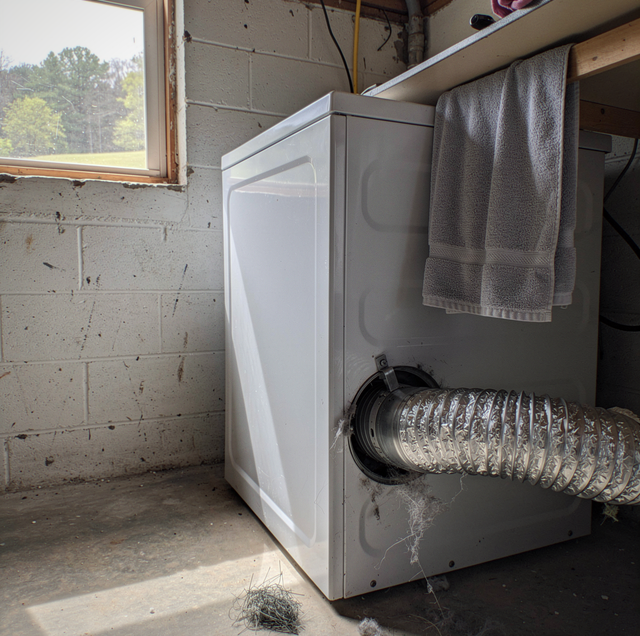
A dryer that suddenly needs two or three cycles to dry one load of towels is not just an inconvenience. It usually means hot, moist air has stopped leaving the house as it is supposed to, and a blocked exhaust path is the single biggest fire risk in an ordinary laundry room. Most people notice the damp load, notice the laundry room running warmer than it should, and just run the dryer again rather than connecting either symptom to the vent itself, which is exactly backward: catching this early is what keeps a warning sign from turning into an actual fire.
Why a Blocked Vent Turns Into a Fire Risk
A dryer works by drawing room air across a heating element, pushing the hot air through the drum to remove moisture from the clothes, and then exhausting the hot, lint-laden air outside through a duct. That duct is the entire safety system. When it is clear, heat and moisture leave the house continuously and the heating element cycles on and off normally to hold a set temperature. When the duct is restricted, whether by a wall of packed lint, a crushed section of flexible hose, or a bird's nest in the exterior vent hood, the hot air has nowhere to go. It backs up inside the duct and the drum; the heating element keeps firing because the dryer's thermostat still senses cool, damp air moving past it, and the internal temperature climbs well beyond what the system was designed to run at. Lint is essentially compressed cotton and synthetic fiber, and it ignites at a temperature an overheating, restricted dryer can reach. That is the actual mechanism behind a dryer vent fire: not a spark, but sustained excess heat with no outlet, sitting directly against fuel.
The Airflow Warning Signs
Clothes take two or more cycles to dry. This is almost always the first sign, because it means moist air is not leaving fast enough for the drum to keep drying efficiently. A single damp load can be a fluke; a pattern of longer and longer dry times over a few weeks is airflow loss in progress.
The dryer runs hot to the touch, or the laundry room heats up noticeably: If the top or front panel feels hotter than usual, or the room itself warms up during a cycle in a way it never used to, exhaust heat is backing up into the house instead of venting outside.
You smell a faint burning or hot-dust odor during the cycle: This is scorched lint sitting too close to the heating element for too long. It is not the same as the normal warm-cotton smell of drying laundry, and it should not be ignored or masked with dryer sheets.
The exterior vent flap barely moves, or does not move at all, during a cycle: Step outside while the dryer runs. A healthy exhaust pushes the flap open with a visible, steady stream of warm air. A flap that stays nearly shut, or that only flutters weakly, means the duct between the dryer and the outside wall is significantly restricted.
Lint shows up around the dryer drum door or on the floor behind the machine: If lint is escaping backward instead of exiting through the vent, that is a sign the duct connection itself has come loose or torn, which lets both lint and heat collect inside the wall cavity rather than outside.
The dryer shuts off mid-cycle on its own: Most modern dryers have a thermal cutoff fuse that trips when internal temperature exceeds a safe threshold. A dryer that repeatedly stops and displays an error, or simply goes cold mid-cycle, is telling you the safety fuse is doing its job because the vent is not.
What Is Actually Restricting the Vent
The most common cause by far is simple lint accumulation along the length of the duct, building up gradually at any point where the airflow slows, especially bends and the exterior termination point. Flexible foil or plastic vent hose compounds the problem because its ridged interior gives lint far more surface area to cling to than smooth rigid metal duct does, and a kinked section of flexible hose behind the machine can choke airflow almost entirely even when the rest of the run is clear. Outside, the exterior vent hood's flap or screen can become clogged with matted lint, or, in warmer months, become an actual nesting site for birds or insects, both of which block the exhaust from the outside in, even when everything inside the wall is clean.
How Long a Vent Run Can Safely Go Between Cleanings
A straight, short duct run with no bends can go longer between cleanings than a long run with multiple 90-degree turns, because every bend is a place lint slows down and settles. As a general guide, a dryer vent should be inspected at least once a year, and homes with long or twisting duct runs, or households doing frequent laundry loads, benefit from checking it twice a year. If you notice any of the warning signs above, that schedule moves up immediately regardless of when the vent was last cleaned.
What You Can Check Yourself
Unplug the dryer and pull it away from the wall to inspect the connection between the machine and the wall duct; if a section has slipped off or torn, it is visible and fixable without special tools. Go outside during a running cycle and confirm the exterior flap opens fully with a strong, steady flow of warm air. Check inside the lint trap housing itself, not just the removable screen, since lint packs into that cavity even when the screen looks clean. What you generally cannot safely check yourself is the full interior length of a rigid or embedded duct run, especially where it passes through a wall cavity or a long horizontal run in an attic or crawlspace, and that is where a professional vent-cleaning tool with a rotating brush earns its purpose.
Signs You Need a Professional Vent Cleaning, Not Just a Lint Trap Wipe
If the warning signs above persist after you have cleaned the lint trap screen and confirmed the machine-to-wall connection is intact, the restriction is further down the duct than a homeowner can reach with a vacuum hose. A professional dryer vent cleaning uses a flexible rotating brush sized to the duct diameter that scrubs the interior wall of the entire run, not just what a shop-vac can suction from the ends, and it clears matted lint from bends that a straight brush or vacuum attachment cannot reach.
Frequently Asked Questions
It does not affect the dryer directly, but it affects appliances that share the same electrical circuit less directly by increasing overall electrical load in an older home's panel; the more direct hard-water tie-in for laundry appliances is scale buildup inside washer valves and water heaters, which is a separate wear issue from dryer vent airflow.
Yes. Rigid or semi-rigid metal duct is the safer choice over flexible foil or plastic accordion hose because its smooth or shallow-ridged interior gives lint far less surface area to catch on, and it also will not crush or kink the way flexible hose can behind a dryer pushed close to the wall.
Both carry the same lint-and-airflow risk mechanism, since both rely on exhausting hot, moist air through the same kind of duct. A gas dryer adds one additional consideration: a restricted vent can also affect how completely the burner combusts, so a gas model with poor airflow deserves the same attention plus a technician's check of burner performance.
It is a one-time safety device wired to shut off power to the heating circuit once the internal temperature crosses a fixed threshold. Once it trips, most models require that fuse to be physically replaced rather than simply reset, which is itself a sign that the vent restriction needs to be fixed before the new fuse is installed.
Yes, indirectly. Dryer sheet residue can build up on the lint screen's mesh over many uses, making the screen look clear while reducing how much air can pass through it. Wiping the screen with a soft brush or dish soap and water periodically restores its actual airflow, not just its appearance.
A sudden change from a strong, steady exterior airflow to almost none, especially during spring nesting season, combined with longer dry times that start abruptly rather than gradually, points toward an animal obstruction rather than gradual lint buildup, which tends to restrict airflow slowly over weeks rather than overnight.
A vent that is doing its job is invisible: the room stays cool, clothes dry in one cycle, and you never think about it. The moment any of that changes, the vent is asking for attention, and it is one of the few home maintenance calls where waiting raises the stakes rather than just the inconvenience.
Book a dryer vent inspection — clear a fire risk before it becomes one. True Appliance Services Inc. serves Maryville, Alcoa, and Knoxville. Call (865) 205-8717.
