
Why Is My Refrigerator Loud? Decode Every Noise
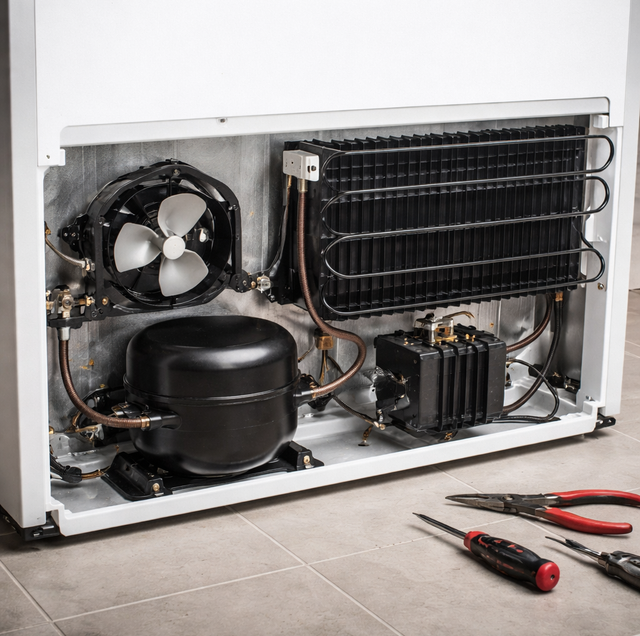
Quick Answer: A steady soft hum, occasional pops, water trickling, and ice dropping are normal. A loud, constant buzz, a grinding or rattling from the back, a repeated click that never leads to the motor starting, or any burning smell means something is wearing out or failing and needs attention.
A refrigerator is never truly silent. It hums, ticks, gurgles, and pops all day as it moves heat out of the cabinet and keeps your food cold. Most of those sounds are the appliance doing its job. The moment that matters is when a new noise shows up, or an old one gets louder, more constant, or harsher. A change in sound almost always traces back to one part, and learning to match the sound to the part tells you whether you have a five-minute fix or a service call on your hands.
The Parts That Actually Make the Noise
Before you can name a sound, it helps to know what is running behind the panels. Five components produce nearly every noise your refrigerator makes.
The compressor sits in the lower back of the cabinet. It pumps refrigerant through the system and is the source of the low hum you hear most of the day. It cycles on and off, so silence between runs is expected.
The condenser fan lives near the compressor at the back. It pulls air across the condenser coils to shed the heat the compressor moves. This fan runs whenever the compressor runs.
The evaporator fan is hidden behind a panel inside the freezer. It blows cold air over the evaporator coil and circulates it into both compartments. Because it sits in the coldest part of the appliance, it is the fan most likely to meet ice.
The defrost timer or control cycles the system into a defrost mode on a schedule so frost does not build up on the evaporator coil. It produces a soft click when it switches modes.
The water inlet valve is an electric valve at the back that opens to feed the ice maker and any water dispenser. It only runs when water is called for.
Knowing where each part lives is half the diagnosis. A sound from the freezer points inward to the evaporator fan; a sound from the lower back points to the compressor, condenser fan, or valve.
Humming and Buzzing
A gentle, low hum is the compressor running, and it is completely normal. The pitch and loudness depend on the model, and quieter kitchens make it more noticeable at night.
The hum becomes a problem when it turns into a loud, harsh buzz or refuses to quiet down between cycles. Loud buzzing usually points to one of three things. A layer of dust and pet hair on the condenser coils forces the compressor to work harder and run longer, which raises the volume. A compressor that is wearing internally can buzz or strain as it struggles to build pressure. And the water inlet valve buzzes loudly when the ice maker calls for water, but the supply line is shut off or barely open, so the valve energizes with nothing to move through it. If the buzz arrives in short bursts tied to the ice maker cycle, suspect the valve and its water supply first.
Rattling and Vibrating
Rattling is the easiest category to chase down because the cause is usually mechanical and out in the open. A drip pan under the cabinet can vibrate loose and buzz against the floor. Items stored on top of the refrigerator hum along with the compressor. A cabinet that is not level rocks slightly and taps the floor as the compressor cycles. Copper or plastic lines at the back can rest against the wall or against each other and transmit vibration into a rattle.
Think of the cabinet as a drum: any loose part touching it turns the compressor's normal vibration into an audible buzz.
Reseat the drip pan, clear anything stored on top, and adjust the front feet so the fridge sits flat with a slight backward tilt. Loose parts touching the cabinet turn the compressor's normal vibration into an audible rattle, so leveling and clearing the top quiets most of them.
A Loud Hum or Grinding From the Back
When the noise clearly comes from the lower back and sounds like a loud whir, hum, or grinding, the condenser fan motor is the usual suspect. Debris such as lint, a scrap of paper, or a dust ball can catch in the blade and clatter. Over years of running, the motor bearings wear, and the fan starts to growl or grind. A fan that is dragging also lets heat build up around the compressor, so a grinding condenser fan is worth acting on rather than living with.
A Loud Noise From Inside the Freezer
A whir, buzz, or chirp that comes from behind the rear panel inside the freezer usually means the evaporator fan. Two things go wrong here. Frost or ice can build up until the fan blade strikes it, producing a rhythmic ticking or scraping in time with the blade. Or the motor bearings wear and the fan whines. A telltale sign is that the sound changes or stops when you open the freezer door, because opening the door cuts power to that fan on many models. If cooling has also fallen off, a struggling evaporator fan is a strong candidate.
Clicking
A single soft click every several hours is normal; that is usually the defrost control changing modes or the thermostat switching the compressor on and off. A click becomes a warning sign when it repeats every few seconds. The compressor relies on a small start device to give it the jolt it needs to spin up. When that start relay or the compressor itself is failing, you hear a click as the relay tries, a pause as the compressor fails to start, and then the cycle repeats. Rapid, repeating clicking with no steady hum following it means the compressor is not starting, and the appliance is losing its cold.
Knocking and Clunking
A heavier knock or clunk, spaced out rather than rapid, generally comes from the compressor as it starts and stops. An occasional clunk on startup can be normal for some models. A loud, repeated knocking that is new deserves attention, because it can mean the compressor's internal mounts or components are wearing.
Gurgling and Hissing
Gurgling and hissing sounds are alarming but are almost always normal. Refrigerant boiling and flowing through the coils gurgles and bubbles as it changes state. During a defrost cycle, water dripping onto the warm defrost element sizzles and hisses. You may also hear a soft trickle as melt water runs to the drain pan. None of these need action on their own.
Normal Versus Needs Action
Sounds that are normal: a steady soft hum, occasional pops and cracks as plastic parts expand and contract with temperature swings, gurgling and hissing from refrigerant and defrost, water trickling to the drain pan, and ice cubes dropping into the bin.
Sounds that need action: a loud, constant buzz that never settles, grinding or growling from the back, scraping or ticking from inside the freezer, and rapid clicking with no motor start. A burning smell with any noise is a stop-now signal.
What You Can Safely Check Yourself
A few checks are safely do-it-yourself, as long as you treat power and moving parts with respect.
Unplug the refrigerator, or cut power at the breaker, before you clean coils, pull the drip pan, or get near a fan. A running fan blade and a live compressor are both hazards, and the compressor and its relay can be hot enough to burn.
Level the cabinet: Adjust the front feet so the fridge sits flat with a slight backward tilt. This stops rocking rattles and helps the doors seal.
Clean the condenser coils: With the power off, vacuum and brush the dust off the coils at the back or behind the lower front grille. Clean coils quiet a straining compressor and cut running time.
Clear the top and reseat the drip pan: Remove items stored on top and make sure the drip pan is seated firmly in its track.
Check the water line if the ice maker buzzes: If a loud buzz coincides with the ice maker trying to fill, confirm the saddle or shutoff valve on the supply line is fully open. Never tip the refrigerator far to reach the back; laying it over risks oil migrating out of the compressor and can injure you.
When to Call a Technician
Some parts sit past the line of safe do-it-yourself work. A worn condenser or evaporator fan motor, a failing start relay, and any compressor problem call for a technician with the right parts and testing tools. The sealed refrigerant system that hisses and gurgles is EPA-regulated and pro-only; it should never be opened by a homeowner. If you smell anything burning, cut the power and call for service rather than running the appliance to see if it clears. Naming the sound before the visit, and noting when it happens, gives the technician a head start.
Frequently Asked Questions
On a modern refrigerator, the compressor typically runs in stretches of roughly 30 minutes to a few hours and is off in between, with a total run time often near half the day. If it runs almost nonstop with only brief pauses, the hum will feel constant, and that points to dirty coils, a failing seal, or a warm room rather than a noise problem alone.
The hum has not changed; the room has. Household noise, HVAC, and appliances mask the compressor during the day, so the same sound stands out in a quiet kitchen at night. If the volume itself rises after dark, the more likely cause is that the compressor runs longer in the cooler overnight hours after the door was opened repeatedly all evening.
Often yes. If the ice maker is switched off but the valve still buzzes, turning the ice maker back on or confirming the supply valve is fully open usually resolves it. A valve that continues to buzz or leaks at the fitting has failed internally and needs replacement, which is a technician job because it ties into both the water line and the control board.
Yes, and it is expected. A full load of warm groceries raises the interior temperature, so the compressor and both fans run longer and harder to pull it back down. The extra running time can last several hours and is not a fault. Loading warm items in smaller batches shortens the recovery.
It can be. The ice maker's ejector motor makes a mechanical click or thunk as it rotates to release cubes and again as it resets, usually a few times per harvest cycle. That click is periodic and paired with the sound of cubes dropping, unlike the rapid, repeating relay click that comes from the lower back with no motor starting.
It can. A surge or brownout can damage the control board or the compressor's start components, and the first symptom is often a new click, a failure to start, or erratic cycling. If odd noises began right after a storm or an outage, mention that to the technician, because it steers the diagnosis toward the electronics rather than a worn mechanical part.
Pin down that fridge noise before it turns into a warm refrigerator — book a certified diagnostic. True Appliance Services serves Maryville, Alcoa, and Knoxville. Call (865) 205-8717.
