
Repair or Replace? When an Appliance Is Worth Fixing
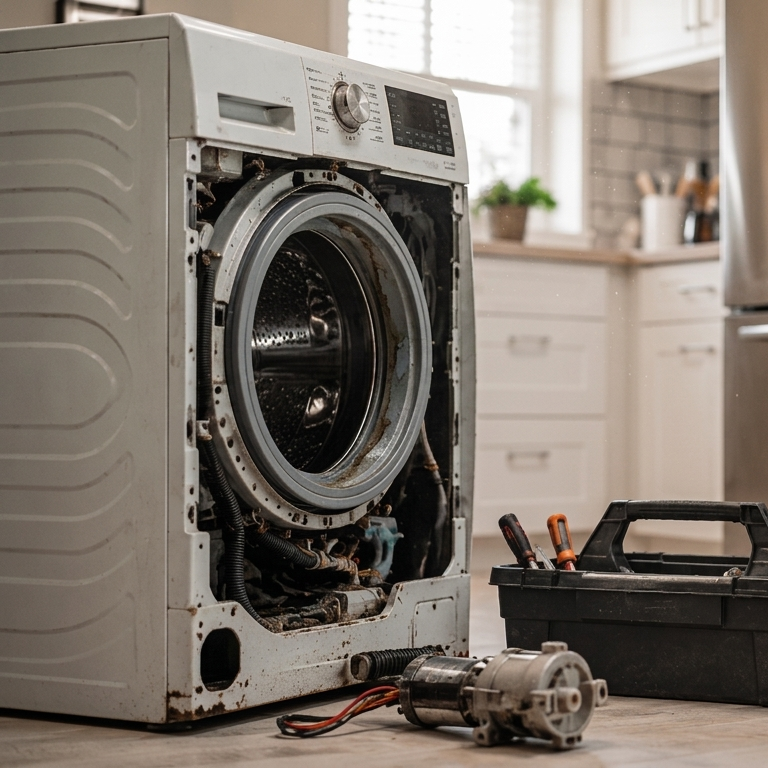
Quick Answer: Repair an appliance when it's relatively young, the failure is a common wear part, the repair costs well under half of a replacement, and it hasn't been breaking repeatedly. Lean toward replacing when the appliance is near or past its typical lifespan, the repair approaches half the cost of new, it's failing again and again, or it's badly inefficient. A useful rule of thumb is the 50% rule: if a repair costs more than half the price of a comparable new unit — especially on an older appliance — replacement usually makes more sense. Age, repair cost, and failure frequency are the three deciding factors.
An appliance breaks, and you're caught between two bad feelings: spending money to fix something old, or spending a lot more to replace something that "mostly" works. It's one of the most common home decisions, and people often make it on gut feeling or whichever is more convenient in the moment. There's a better way — a simple framework built on a few honest questions that usually points clearly toward repair or replacement.
The Decision Comes Down to Three Questions
Whether to fix or replace almost always turns on three things: how old the appliance is relative to its expected life, how the repair cost compares to a new unit, and how often it's been breaking. Any one of these can tip the decision, and together they make it clear. The trap is looking only at the immediate repair price in isolation — a "cheap" fix on a worn-out machine that breaks again in three months isn't cheap. Step back and weigh all three.
Question 1: How Old Is It?
Every appliance has a typical lifespan, and where yours falls in that range matters enormously. A problem in the first few years of an appliance's life usually argues for repair — you're fixing a machine with most of its life ahead of it. A problem near or beyond the typical lifespan argues for replacement, because even after this repair, other parts are likely approaching their own end.
Knowing roughly how old your appliance is, and how that compares to what's normal for that type, frames everything else. An older appliance also tends to be less efficient than a new one, which adds a quieter ongoing cost to keeping it.
Question 2: How Does the Repair Cost Compare to New?
This is where the well-known 50% rule helps. The guideline: if the cost of repair exceeds half the cost of a comparable new appliance, replacement is usually the better value — particularly when the appliance is older. A minor repair on a newer machine is an easy yes; a major repair that approaches half the price of a new unit on an aging machine is a strong signal to replace.
| Situation | Lean repair | Lean replace |
|---|---|---|
| Age | Within first half of lifespan | Near or past typical lifespan |
| Repair cost vs. new | Well under 50% of new | Approaching or over 50% of new |
| Failure history | First or rare repair | Repeated, recurring breakdowns |
| Efficiency | Reasonably efficient | Noticeably outdated and costly to run |
| Part type | Common wear part | Major component (compressor, etc.) |
The type of part matters here, too. A common wear item — a seal, a heating element, a fan, a valve — is usually a sensible repair. A major component failure, such as a refrigerator compressor or the sealed system, is a more expensive repair that pushes an older appliance toward replacement.
Question 3: How Often Is It Breaking?
A single failure on an otherwise reliable appliance is just a repair. An appliance that's needed several fixes in a short span is telling you something: it's wearing out as a whole, and each repair is just postponing the next. When breakdowns become a pattern rather than an event, the cumulative cost and hassle usually justify replacement, even if any single repair looks affordable. Tracking what you've already spent on a problem appliance often makes the decision obvious.
Before deciding, ask the technician two questions: what's the likely remaining life of the appliance after this repair, and is this failure a sign other parts are near the end? An honest answer to both — which a trustworthy technician will give — usually settles the repair-or-replace question better than the repair price alone.
Put the Three Together
The three questions work as a set. A newer appliance with a first-time, common-part failure that costs well under half of new? Repair it. An older appliance, past its prime, facing a major repair near half the cost of new, that's already broken a few times? Replace it. Most decisions fall clearly to one side once you weigh age, cost ratio, and failure history together rather than reacting to the repair quote alone. And because appliance value and reliability matter, getting an honest assessment from a technician who'll tell you straight — rather than just selling a repair or a new unit — is worth a lot.
Frequently Asked Questions
The 50% rule is a common guideline: if repairing an appliance costs more than half the price of a comparable new one, replacement is usually the better value — especially for an older appliance. It's a quick gut-check, not an absolute law. A repair well under 50% of new generally makes sense; one approaching or exceeding that threshold on a machine that's already aged leans toward replacing rather than fixing.
You can often find the manufacture date on the appliance's data plate or serial number (a technician or the manufacturer can help decode it), and compare it to the typical lifespan for that appliance type. Knowing where you fall — the first half or the back half of its expected life — is one of the biggest factors in the repair-or-replace decision, since age affects both this repair and the likelihood of future ones. An appliance early in its life is usually worth investing in, while one near the end rarely is, even for the same repair.
It can be, if the repair is minor, inexpensive relative to a new unit, and the appliance hasn't been failing repeatedly. But an older appliance facing a major or costly repair, or one that's broken several times, often isn't worth fixing because other parts are likely nearing their end, too. Weigh the repair cost against a new unit and consider the appliance's reliability history before committing.
Replacement is usually the clear choice when the appliance is near or past its typical lifespan and faces a major repair, when the repair approaches half the cost of a new unit, when it's been breaking down repeatedly, or when it's badly inefficient. Any one of these can justify replacing; together they make a strong case. The goal is to avoid pouring money into a machine that will keep failing.
Look for a technician willing to give you the full picture — what's wrong, what the repair costs, the appliance's likely remaining life, and whether replacement might serve you better — rather than one who only pushes a repair or a sale. An honest, upfront assessment that lays out the trade-offs lets you make the call with confidence. Transparency about the appliance's real condition is a sign of trustworthy guidance.
Weigh All Three, Not Just the Quote
The repair-or-replace decision gets much easier when you ask three questions: How old is the appliance? How does the repair cost compare to a new one (the 50% rule)? And how often has it been breaking? A young appliance with a cheap, first-time fix is worth repairing; an old one facing a costly repair after repeated failures is worth replacing. Weigh the three together, get an honest technician's read on the appliance's remaining life, and you'll spend your money where it actually makes sense.
Not sure whether to fix it or replace it? — Get an honest, upfront assessment from certified local technicians who'll tell you straight. True Appliance Services Inc. serves Maryville, Alcoa, Knoxville. Call (865) 205-8717.
