
What Causes Water to Pool Inside Your Refrigerator?
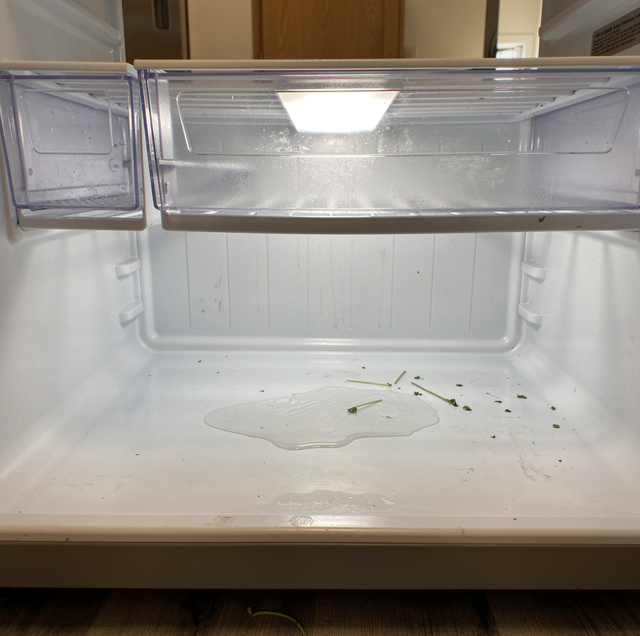
A puddle under the crisper drawers, or a wet sheen along the bottom of the fridge compartment that wasn't there yesterday, is a different problem from water pooling on the kitchen floor under the appliance, even though homeowners often assume the two are related. Water pooling inside the cabinet means moisture is being created or trapped somewhere within the refrigerator itself, and the fix depends entirely on which internal system is behind it.
How a Refrigerator Is Supposed to Handle Moisture
A refrigerator's cooling system runs on a cycle: the evaporator coil in the freezer section gets cold enough to frost over as it absorbs heat from the air, and periodically a defrost heater switches on to melt that frost before it builds into solid ice. The resulting meltwater is supposed to drain through a small channel, the defrost drain, down into a drain pan underneath or behind the unit, where it evaporates harmlessly from the compressor's heat. Water pooling inside the fresh food compartment means the drainage path failed at some point between the coil and the pan, and there are really only a handful of places where that failure can occur.
The Defrost Drain Is the Most Common Culprit
The defrost drain is a narrow tube, often no wider than a pencil, that channels defrost meltwater from the freezer compartment down and out of the cabinet. Food debris, sticky spills, or simple mineral buildup from the water itself can narrow or fully block that tube over time. When it clogs, the meltwater from each defrost cycle has nowhere to go and backs up, seeping out at the bottom of the freezer or fresh food section instead of draining away as designed. This shows up as water pooling under the crisper drawers in the fresh food section specifically, because many refrigerator designs route the drain channel behind or beneath that section on its way out.
A Door Seal Gap Lets in Humid Air That Condenses
The rubber gasket around the refrigerator door is supposed to form an airtight seal against the cabinet. A gasket that has warped, torn, or simply lost its shape after years of use lets a steady trickle of warm, humid kitchen air leak into the cold compartment. That humid air hits the cold interior surfaces and condenses, the same way a cold glass sweats on a summer day, and over time that condensation accumulates into visible puddles, especially along the bottom of the door opening where the leak is usually worst. A simple test is sliding a dollar bill into the closed door at several points around the perimeter; if it pulls out with no resistance anywhere, the seal has a gap at that spot.
An Overpacked Crisper Drawer Blocks the Airflow Vents
Most refrigerators circulate cold air through a series of vents between the freezer and fresh food sections, and those vents typically sit at the back of the crisper drawer area. A drawer packed too full, or produce stacked high enough to press against the back wall, blocks that airflow path. Blocked airflow changes the humidity balance in that section, and condensation forms on the cold surfaces around the vent rather than circulating properly, which often looks exactly like a drain problem even though the actual cause is simply how the drawer is loaded.
A Failed Defrost System Component Causes Ice Dams That Melt Unevenly
If the defrost heater, defrost thermostat, or defrost timer fails, frost on the evaporator coil never fully melts during the scheduled defrost cycle and instead keeps building, layer upon layer, into a solid ice dam. When that ice dam eventually partially melts, whether from a temperature swing or the compressor's own heat, it melts unevenly and in larger volumes than the drain channel was ever designed to handle in a single cycle, overwhelming the drain even if the drain tube itself is perfectly clear. This is the least common of the four causes but the one most likely to require a technician, since it means testing an electrical component rather than clearing a channel.
Telling the Causes Apart
A clogged defrost drain typically shows water only in the fresh food section, often specifically under or behind the crisper drawers, and it tends to reappear on a predictable cycle tied to the refrigerator's automatic defrost schedule. A door seal leak shows condensation concentrated near the door's edge and gets noticeably worse in a hot, humid kitchen or right after the door has been left ajar. An overpacked drawer issue resolves the moment you thin out the contents and clear the back vents, which is the easiest of the four to rule out first. A failed defrost component often comes with a second symptom: unusually warm food in the fresh food section or visible ice buildup in the freezer, because the entire cooling cycle is off, not just the drain.
What You Can Check Yourself
Locate the defrost drain, usually a small hole at the back of the freezer compartment floor, and use a turkey baster with warm water or a length of thin, flexible tubing to gently flush it; a clog often clears with nothing more. Run the dollar-bill test around the full perimeter of the door gasket to check for gaps, since a worn gasket is an easy part to source and swap once identified. Pull the crisper drawers out completely and check that nothing is blocking the vent openings at the back of that section. Then reload the drawers, leaving a small gap between the food and the back wall. If none of those resolve it within a day or two, or if you notice the freezer building unusual ice or the fresh food section running warmer than normal, the issue has likely moved to the defrost heater or thermostat, which calls for a multimeter test a technician can run safely.
Frequently Asked Questions
Yes. East Tennessee's hard water leaves mineral scale wherever water sits or evaporates repeatedly, and the defrost drain tube sees exactly that kind of repeated wet-dry cycling every time the refrigerator defrosts, so mineral deposits narrow the tube's diameter faster in hard water areas than they would with soft water.
No. Boiling water can warp or crack the plastic drain tube and the surrounding components, since they are designed for the modest temperature range of normal defrost cycling, not near-boiling water; warm tap water is enough to melt an ice clog without risking the tube itself.
If your model's ice maker fill tube runs near the same rear panel as the defrost drain, a slow leak at the fill tube's connection can mimic a defrost drain problem, showing up on a schedule tied to ice production rather than the defrost cycle, which is worth ruling out by watching whether the puddle timing lines up with ice-making cycles or defrost cycles specifically.
Yes, in a less direct way. A refrigerator that tilts even slightly can cause condensation or minor drain overflow to pool toward one side or the front of the compartment rather than draining evenly, so checking that the unit sits level front-to-back and side-to-side, using the adjustable front feet, is worth doing before assuming a component has failed.
Flushing the defrost drain with warm water once or twice a year, timed with a general refrigerator cleaning, prevents the gradual buildup of minerals and debris that can lead to a full clog, and it takes only a few minutes because the drain opening is easy to access once the freezer shelves are removed.
Yes. A gap in the door gasket does not just cause condensation; it also lets cold air continuously escape, forcing the compressor to run far more often than it should to hold temperature, so a worn gasket that is causing visible condensation is very likely also making the compressor work harder than it needs to at the same time.
Water inside the cabinet almost always points to one of these four places, and three of the four are things you can check and often fix yourself in a few minutes. The one that is not, a failed defrost heater or thermostat, is worth confirming with a proper test rather than guessing, since running a refrigerator with a bad defrost system for months can eventually strain the compressor that keeps everything else running.
Schedule a refrigerator diagnostic — find and fix the real source of the leak. True Appliance Services Inc. serves Maryville, Alcoa, and Knoxville. Call (865) 205-8717.
