
Ice Maker Not Making Ice? 7 Fixes Before You Call
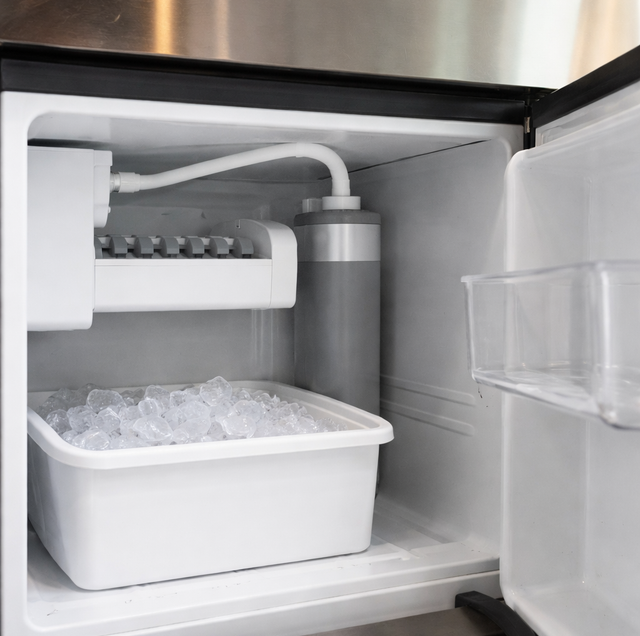
Quick Answer: Most weak or empty ice makers trace back to one of seven things: a shutoff arm left in the OFF position, a clogged or old water filter, a frozen fill tube, a failing water inlet valve, water pressure that is too low, a freezer running warmer than 0 degrees Fahrenheit, or a worn ice-maker module. Check the arm and filter first, then the fill line, then the valve and pressure.
An ice maker that trickles out a few cubes, or nothing at all, is one of the most common calls we handle, and the reasons range from a switch someone bumped to a part that has quietly worn out. The good news is that several of the causes are things you can check in ten minutes without any tools. The trickier ones point to a water valve or a module that has reached the end of its life. Working through the list in order, from simplest to deepest, saves you from replacing a part that was never the problem.
Start With The Simple Things
Before you assume a part has failed, rule out the three problems that cause more empty ice bins than any mechanical fault. Each takes a minute, and none requires tools.
Confirm the shutoff arm or feeler is in the ON position: Every ice maker has a way to stop making ice once the bin is full. On older units, it is a wire arm that lifts to shut off and drops down to run. On newer units, it is a plastic feeler or an electronic switch. If someone lifted the arm to grab ice and left it up, or the feeler is resting against a mound of frozen-together cubes, the unit reads a full bin and stops. Push the arm all the way down, or clear the pile the feeler is leaning on, and confirm the switch is set to run.
Replace a filter older than six months: The refrigerator water filter sits between the supply line and the ice maker. As it loads with sediment, flow drops, and the ice maker is usually the first thing to starve because it needs a full, timed fill. A filter that is six months old, or that has pushed a lot of cloudy or hard water, can choke the fill to a trickle. Swapping in a fresh cartridge is often the entire fix. If you have gone longer than six months, replace it even if the water still tastes fine.
Check that the freezer is near 0 degrees Fahrenheit: An ice maker will not cycle properly until the mold reaches a cold enough temperature to freeze a batch on schedule. If the freezer is set warm, or is packed so full that air cannot move, cubes form slowly and come out small, hollow, or stuck together. Set the freezer to around 0 degrees Fahrenheit and give it a day to stabilize before judging the ice output.
When the Water Cannot Get In
If the simple checks come up clean, the next suspect is the path the water takes to reach the mold. A single freeze or a worn valve anywhere along that path shows up as weak or missing ice.
The frozen fill tube: Water reaches the ice-maker mold through a small fill tube at the back of the freezer. That tube carries only a thimble of water per cycle, so if the freezer runs cold and a little water lingers after a fill, it can freeze into a plug. Once the tube ices over, the next fill has nowhere to go, and the bin stays empty. You can usually spot it as a small icicle or a bead of ice at the tube opening.
To thaw a frozen fill tube, switch the ice maker off and warm the tube with a hair dryer on low or a cloth soaked in warm water until the plug melts. Never chip at a frozen line with a screwdriver, knife, or pick, since the tube and its plastic housing crack easily and a cracked fitting turns a free fix into a leak.
The water inlet valve and the pressure it needs: The water inlet valve is the electrically operated gate that opens for a set number of seconds each cycle to send a measured shot of water to the mold. It is a common wear part. The rubber seat inside stiffens with age and mineral scale, so the valve opens partway, or opens but does not fully close, or stops opening at all. A valve that opens partway gives you small, light cubes. A valve stuck shut gives you none.
The valve also needs real pressure behind it to work. Most refrigerator inlet valves are built to open against roughly 20 to 120 pounds per square inch of household water pressure. Below that range, the valve may click open but pass almost nothing in its short timed window, so the ice comes out thin or the fill never completes. Low pressure often traces to a partly closed saddle valve or shutoff behind or under the fridge, a kinked supply line, or a home on a well with a weak pressure setting.
Testing a valve or a line means getting behind the appliance and shutting off the water first, and replacing an inlet valve is electrical and plumbing work at the same time. That is the point where most people should bring in a technician rather than guess. Swapping the wrong valve, or overtightening a compression fitting, creates a slow drip you may not notice until it has warped the floor.
When The Cold Or The Machine Itself Is The Problem
Two more causes sit deeper in the system, and both tend to need a trained eye.
A freezer that runs too warm: Beyond the thermostat setting, a freezer can drift warm because a door gasket no longer seals, the defrost system is struggling, or the condenser coils are packed with dust and cannot shed heat. A freezer holding at 10 or 15 degrees instead of 0 will make ice slowly and unevenly, and you will often see frost building in the wrong places or food that feels softer than it should. You can vacuum the coils and confirm the door seals. A failing defrost heater or a low refrigerant charge in the sealed system are not, and they need diagnosis with instruments.
The ice-maker module and its motor: The module is the gearbox and control assembly that runs the whole cycle: it signals the valve to fill, times the freeze, then turns a motor to eject the finished cubes and sweep them into the bin. A worn ejector motor, a stripped gear, or a failed thermostat inside the module can leave you with cubes that form but never release, or a unit that fills but never harvests. Think of the module as the metronome for the whole operation. When its timing drifts, every other part can be healthy, and you still get a stalled or half-filled bin.
Some modules can be tested by advancing them through a manual cycle, but reading the results and matching the failure to the right replacement is where experience pays off. A module that is swapped when the real fault was a starving valve just repeats the same weak-ice problem with a new part in the box.
When To Call A Technician
Handle the homeowner-safe checks yourself: the arm position, the filter, the freezer temperature, a gentle thaw of a frozen fill tube, and a vacuum of the condenser coils. Call a professional when the ice stays weak after all of those, when you suspect the inlet valve or a pressure problem, when the freezer will not hold temperature, or when the module fills but never ejects. Anything involving the sealed refrigeration system, the inlet valve wiring, or a water line that needs cutting is a technician job, both for safety and to avoid turning a small fault into water damage or an electrical hazard.
A methodical top-to-bottom pass fixes a surprising share of ice makers at the arm or the filter. When it does not, you have at least narrowed the problem to the valve, the cold, or the module, which makes the service visit faster and cheaper.
Frequently Asked Questions
A standard freezer-mounted ice maker runs a cycle roughly every 90 minutes to two hours and drops about 8 to 10 cubes per harvest, which works out to somewhere near 2 to 3 pounds of ice a day for most residential units. If yours is taking far longer or dropping only a cube or two per cycle, the fill volume or the freezer temperature is the first thing to measure, not the module.
Odd taste is usually separate from output and comes from the ice absorbing freezer odors, because frozen water acts like a sponge for airborne smells from strong or unwrapped food. Tossing the current bin, wrapping pungent items, and running a box of baking soda in the freezer clears most of it. If the taste is metallic or chemical instead, that points to an old filter rather than the food.
Yes, and it is a frequently missed cause. A reverse-osmosis system lowers the water pressure reaching the fridge, and if the inlet valve is starved below its minimum, the ice maker under-fills. Plumbing the fridge to an RO line often needs a small pressure pump or a dedicated high-flow feed to give the valve the pressure its timed fill was designed around.
It is. A new or newly reconnected unit commonly needs 12 to 24 hours before the first full harvest, because the freezer has to reach operating temperature and the ice maker often skips its first fill or two while it primes and clears air from the line. Discard the first two or three batches as well, since they can carry manufacturing residue from the mold.
Often, yes. Many refrigerators tap the water supply with a saddle valve, a small clamp fitting on a nearby cold-water pipe, and if that valve was only ever cracked partway open, or someone nudged it while working under the sink, the fridge gets a starved trickle. Tracing the line back to that valve and opening it fully is a quick check that people skip because they assume the water is either on or off.
It does, mainly through scale. Dissolved minerals in hard water build a chalky deposit on the inlet valve seat and inside the mold, which slowly restricts flow and makes cubes cloudy or undersized long before the part fully fails. Periodic descaling and staying current on the filter slow it down, but in very hard-water homes the inlet valve tends to be the part that wears out first.
Book a diagnostic visit — get your ice maker filling full batches again. True Appliance Services Inc. serves Maryville, Alcoa, Knoxville. Call (865) 205-8717.
