
Dishwasher Not Draining? Trace the Standing Water Fast
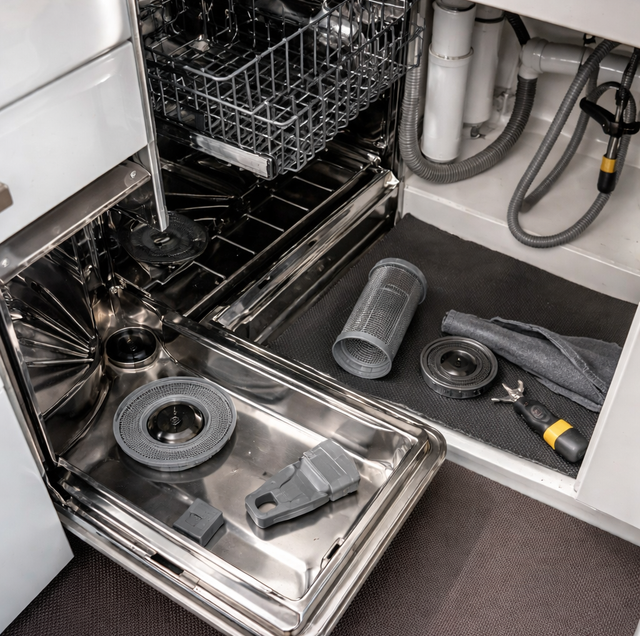
Quick Answer: Standing water means the used wash water cannot exit through the drain path. The most common culprit is a clogged filter packed with food and grease. Other suspects, in order of likelihood, are a kinked or clogged drain hose, a plugged air gap on the counter, a garbage disposal with the shipping knockout plug still in place, a blocked drain line, or a failed drain pump. Start by cleaning the filter and checking the disposal.
You open the door expecting clean dishes and find a shallow pool of gray water sitting in the bottom of the tub. That standing water is the symptom, not the problem. It means the wash water that cleaned your dishes never made it out of the machine, so it settled back down and pooled around the filter. The cause is almost always a blockage or failure somewhere along the drain path, and finding it is a matter of following that path one link at a time.
How a Dishwasher Actually Drains
Before chasing the clog, it helps to know the route the water takes on its way out. At the end of a cycle, the drain pump switches on and pushes the dirty water up out of the tub. From there it travels through a flexible drain hose that loops upward, usually under the sink. That upward loop, or a small air gap fitting on the countertop, keeps dirty sink water from siphoning back into the clean machine.
The hose then connects to one of two places: the side of your garbage disposal, or a dedicated port on the sink drain line. Once the water reaches that junction, it joins the household drain and goes down the pipe. A one-way check valve near the pump keeps the water from sliding back into the tub after the pump shuts off.
Every one of those components is a place water can get stuck. A clog anywhere along that chain stops the whole run, and the water has nowhere to go but back to the bottom of the tub. Knowing the sequence is what lets you test each link instead of guessing.
The Common Causes, in Order
A clogged filter is the number one cause: At the bottom of the tub sits a cylindrical or flat filter assembly that traps food particles so they do not recirculate onto your dishes. Over months of use, that mesh loads up with softened food, grease, seeds, and label glue from jars. Once it clogs, water struggles to reach the pump inlet and drainage crawls. Twist the filter counterclockwise, lift it out, and rinse it under hot running water with an old toothbrush. This single step resolves a large share of drainage complaints.
A kinked or clogged drain hose is next: The corrugated hose under the sink flexes easily, and it can pinch behind the machine when a dishwasher is pushed back into its cabinet, or sag into a low spot where grease congeals. Trace the hose by hand and feel for a sharp bend or a soft, squishy section that signals a clog inside.
A clogged air gap stops drainage cold: That small chrome cylinder on the counter behind the faucet is the air gap. Grease and debris collect inside its cap. When it plugs, you often see water bubbling up out of it during a cycle. Pop the cover off, unscrew the plastic cap underneath, and clear any gunk with a bottle brush.
If a new garbage disposal was installed just before the dishwasher stopped draining, suspect the shipping knockout plug. That molded plug seals the disposal's dishwasher inlet at the factory and must be punched out during installation, or the drain hose empties into a sealed dead end. Shine a light into the inlet where the hose attaches to confirm it was removed.
A blocked drain line farther down the pipe can be the issue when the sink itself also drains slowly. If both the dishwasher and the kitchen sink back up, the shared drain line is the common point, and the clog lives past the appliance.
A failed drain pump or a stuck check valve is the mechanical failure at the end of the list. If the filter, hose, air gap, and disposal are all clear and water still will not leave, the pump motor may have burned out, an impeller may have jammed on a shard of glass or a fruit pit, or the check valve may be stuck shut. You will sometimes hear a faint hum with no drainage, which points to a jammed or dead pump.
An appliance drain path behaves like a garden hose with one crimp anywhere along its length: it does not matter that the other twenty feet are wide open, because that single pinch stops the entire flow. Your job is to walk the line until you find the crimp.
What You Can Safely Check Yourself
Start with the easy wins before opening anything mechanical.
Clean the filter first: Pull the bottom rack, remove the filter assembly, and wash it thoroughly. Check the sump area underneath for a stray bone, a chip of glass, or a bread tab that could block the pump inlet.
Scoop out the standing water: Before any other work, bail the pooled water into a bucket with a cup, then sponge the last inch dry. Move slowly, because that murky water can hide broken glass or sharp scraps you cannot see. Wear a glove.
Check and clear the air gap: Twist off the countertop cover and clean the cap underneath. This takes two minutes and is easy to overlook.
Run the garbage disposal: Turn on the water, run the disposal for several seconds, and listen for it to clear. If the disposal is brand new, confirm the knockout plug was removed by shining a light into the dishwasher inlet where the hose attaches.
Inspect the hose for kinks: Feel along the drain hose for a pinch point where the machine meets the cabinet, and gently straighten any sharp bend.
Run a rinse cycle to clear soft clogs: After clearing the filter and disposal, start a short rinse-only cycle. The moving water can flush out a soft, partial clog that a static inspection missed, and it confirms whether drainage is restored.
When to Call a Technician
Some parts of the drain path are not meant for a homeowner. If the standing water persists after the filter, hose, air gap, and disposal all check out clean, the failure is likely inside the machine. The drain pump, the check valve, and the control board that tells the pump when to run are technician territory. Diagnosing a dead pump versus a stuck valve versus a bad control signal takes a meter and the know-how to read it.
Before anyone reaches near the pump or its wiring, cut power to the dishwasher at the breaker or unplug it. Water and live electrical connections do not mix, and the pump area sits low in the machine where any residual water pools. A professional will pull the machine, test the pump for continuity, inspect the impeller for a lodged shard, and confirm the control board is sending the drain signal.
One thing to avoid at every step: never pour chemical drain cleaner into the dishwasher tub. Those caustic products are formulated for open pipes, not for the rubber seals, plastic housings, and pump components inside an appliance, and they can eat through gaskets and crack fittings. A clogged appliance drain is cleared mechanically, by hand, not chemically.
Detergent and Habits That Keep It Draining
A share of drainage trouble is self-inflicted. Never substitute liquid dish soap for dishwasher detergent. Hand soap is built to foam, and it produces a wall of suds that overwhelms the tub, leaks onto the floor, and interferes with drainage. Use only detergent formulated for automatic dishwashers, and store it dry so the tabs do not clump.
Scrape plates of large food before loading rather than rinsing them spotless, since a little residue actually helps the detergent enzymes work, but bones, pits, and produce stickers belong in the trash, not the tub. Running the hot water at the sink for a few seconds before you start the cycle brings hot water to the machine right away, which helps dissolve grease that would otherwise settle in the filter and hose.
Frequently Asked Questions
Yes. A small amount of clean water sitting in the recessed sump around the filter is by design and keeps the pump seal from drying out. What signals a problem is dirty, food-flecked water covering the whole floor of the tub above the filter grate. Clean residual water below the grate is fine; a murky pool above it is not.
A cup of white vinegar poured into the empty tub and run through a hot cycle can loosen mild grease film and freshen the interior, and it will not harm seals the way caustic drain cleaner does. It will not clear a solid blockage like a lodged pit or a plugged filter, though. Treat it as light maintenance between cleanings, not a fix for a true clog.
A machine that drains fully but still smells usually has buildup in the spots water doesn't scour, such as the filter housing, the spray-arm holes, and the rubber door gasket. Wipe the gasket fold with a damp cloth, poke a toothpick through clogged spray-arm jets, and run a monthly hot cleaning cycle. The odor is biofilm, not a drainage failure.
The drain portion of a cycle typically runs 60 to 90 seconds, and you can hear the pump note change as the water clears. If the pump runs far longer than that, cycle after cycle, or the machine hums without expelling water, the pump is straining against a restriction or beginning to fail. A drain that used to be quick and is now dragging is an early warning worth investigating.
It can. Mineral scale from hard water gradually coats the filter mesh, the check valve seat, and the inside of the drain hose, narrowing the passages and giving grease more texture to cling to. Homes with hard water benefit from a periodic descaling cycle with a citric-acid-based dishwasher cleaner, which dissolves the scale before it builds into a restriction.
Even with a countertop air gap doing the anti-siphon job, installers still route the drain hose in a high loop fastened up under the counter as a backup against backflow. If yours sags low without either feature, dirty sink water can siphon into the machine and leave standing water that looks like a drain failure. Confirming the hose rises high before it drops is part of a correct install.
Book a drain diagnosis today — stop the standing water before it warps your floor or spoils a load. True Appliance Services Inc. serves Maryville, Alcoa, and Knoxville. Call (865) 205-8717.
