
Why Is My Washer Leaving Clothes Soaking Wet?
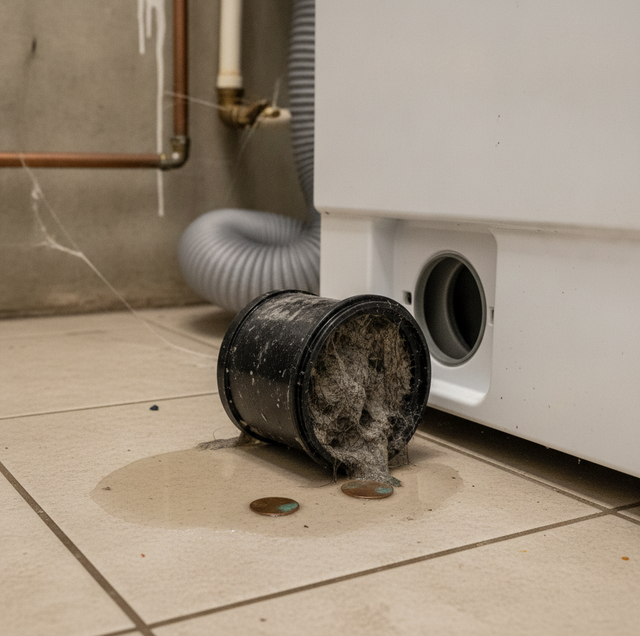
The cycle ends, you lift the lid, and the load is still dripping. Heavy, cold, clearly never spun out. Now it cannot go in the dryer, and you are left wondering whether you loaded it wrong or whether something inside the machine gave up. The good news is that soaking-wet laundry almost always traces to one of a handful of specific faults, and several of them you can find and fix in a few minutes without tools or a service call.
Here is how a washer can leave clothes wet, and how to narrow it down.
Two Jobs Have To Happen: Draining, Then Spinning
Dry-ish laundry at the end of a wash depends on two separate actions. First, the pump has to push the wash water out through the drain. Then the drum has to spin fast enough to fling the leftover moisture out of the fabric and out through the same drain. If your clothes come out soaked, exactly one of those actions failed, and telling them apart is the first move.
The quickest test is to look at the drum the moment the cycle stops. Standing water pooled around the clothes points at drainage: the pump never cleared the tub. An empty tub with sopping clothes points at spin: the water left, but the drum never got up to extraction speed. That single observation splits every cause below into half worth investigating.
| What you see when the cycle ends | Where the fault sits |
|---|---|
| Water still pooled in the drum | Drain side (hose, filter, or pump) |
| Tub empty, but the clothes are heavy and dripping | Spin side (balance, cycle, belt, or lid switch) |
The Drain Side
When water cannot leave the tub, the clothes soak in it and come out drenched. Trace the drain path from the drum outward. Start where a blockage is most likely and easiest to reach, then work back toward the pump.
Front-load washers hide a small drain pump filter, often called a coin trap, behind a little access door at the lower front of the cabinet. It catches coins, buttons, hairpins, and lint before they reach the pump impeller. When it is full, water drains slowly or not at all. Behind that filter, the drain hose that runs to your standpipe or utility sink can kink, sag, or clog with lint and detergent sludge, and any of those chokes the flow. Deeper in, the drain pump itself can fail: the motor stops turning or the impeller cracks, so nothing moves the water even when the path ahead is clear. Cleaning the filter and straightening the hose are the two checks that clear a large share of drain-side wet loads.
The Spin Side
If the tub drains but the clothes stay heavy, the drum never reached extraction speed. The most common reason has nothing broken about it at all: an unbalanced or overloaded load. When laundry clumps to one side, or you have packed the drum past its comfortable fill, the washer's balance protection senses the wobble and deliberately throttles the spin down, or skips high-speed extraction entirely, to keep the machine from walking across the floor and damaging itself. The clothes never get wrung out. Opening the door, spreading the load evenly, and running spin again usually fixes it on the spot.
Cycle choice matters too. Delicate, hand-wash, and bulky-item programs use a low spin speed by design, so picking one of those leaves clothes far wetter than a normal or heavy cycle would, with nothing wrong at all. Past those everyday causes sit the repair-level ones: a stretched or worn drive belt slips and cannot bring the drum up to speed, and a failing lid switch or door lock tells the control board the machine is not safely closed, so it refuses to spin fast. Those need parts, not a load adjustment.
Run a Spin-Only Cycle To Test
Before you assume the worst, isolate the spin. Most washers have a spin-only or drain-and-spin setting; run it on the empty, already-wet load and watch. If the drum ramps up to a fast, steady spin and the clothes come out noticeably drier, the wash portion or an unbalanced load was the culprit, not the hardware. If the drum barely turns, thumps and slows, or the machine drains but never spins up, you have narrowed it to a balance sensor, belt, or lid-switch or lock issue worth a closer look. This one test saves you from replacing parts that were never the problem.
When To Bring In a Technician
Many wet-load problems stay firmly in DIY territory: clean the coin trap, straighten the drain hose, spread and shrink the load, and pick a normal or heavy cycle instead of a delicate one. Work through those, run a spin-only test, and most cases resolve. If the tub still holds water after you have cleared the filter and hose, the fault is likely the drain pump. If the tub drains but a spin-only run still leaves clothes soaked, a worn drive belt or a failing lid switch or door lock is the usual suspect, and both call for diagnosis rather than more guessing. A washer that keeps handing back wet laundry after the simple checks is telling you it needs a technician.
Frequently Asked Questions
Sound is a clue the drum picture alone misses. A drain pump that whines, buzzes, or grinds without moving water usually has a jammed or failing impeller. A rhythmic slapping or squealing that rises with drum speed points to a worn drive belt slipping on its pulley. If the machine falls completely silent at the spin step, with no motor hum at all, suspect the lid switch or door lock cutting the circuit before the drum tries to turn.
Every high-efficiency front-loader has one, usually behind a rectangular panel low on the front that pops off with a coin or flat screwdriver in the seam. Many hide a short spout or stubby drain hose beside the filter cap; pull that free and empty it into a pan before you twist the cap, which spares you a floor flood. Once it stops draining, unscrew the filter fully and fish out the lint felt, coins, and hairpins, then wipe the threads so the cap reseats without dripping.
This one fools the machine rather than blocking it. If the drain hose is pushed too far into the standpipe, or the standpipe opening sits lower than the washer's tub, the drum can siphon: water gets pulled out on its own while the machine is still filling and washing. The water-level sensor keeps calling for more, the cycle stretches, and the timing never lines up for a proper spin. Raise the hose so only a couple of inches enter the standpipe, and leave an air gap so nothing seals tight.
A high-efficiency front-loader needs a weight spread around the drum to stay balanced. A single dense item, like one bath mat or a lone bulky towel, plants itself on one side, and the balance system reads that as a dangerous wobble and refuses to ramp up, so the item never gets extracted. The fix is counterintuitive: add two or three more towels so the drum can distribute the mass evenly, and the washer will finally commit to a full-speed spin.
Yes, through a problem called suds-lock. Too much detergent, or a non-HE formula in a high-efficiency machine, whips up more foam than the tub can clear. The washer detects the excess suds, halts, and pumps in extra rinses to break them down, holding the spin to a crawl because foam-slick clothes cannot be flung dry safely. Switch to the correct HE detergent and cut the dose to the low line on the cap; the extra rinses and weak spins usually stop once the foam does.
A faulty water-level or pressure sensor. That part tells the control board how full the tub is by reading air pressure through a small hose. If the sensor drifts or its hose clogs, the board thinks water is still present and either keeps filling or refuses to advance to a fast spin, leaving clothes wet even though the pump, belt, and motor are fine. Because a bad sensor and a bad pump look identical from outside, a technician confirms it by testing the part, so you avoid swapping a healthy pump.
Reading the Drum: Drain First, Then Spin
A washer that keeps clothes soaking wet failed at one of two jobs, and the drum tells you which. Water left behind means chase the coin trap, the drain hose, and the pump. An empty tub with heavy clothes means look at the load balance, the cycle you picked, then the belt and lid switch. A spin-only test cleanly separates a bad wash from bad hardware, so run it before you swap any parts. Clear the simple checks, and most wet loads sort themselves out at home; if the machine still hands back a dripping load after all of them, that is your cue to have it looked at.
If your washer keeps leaving clothes soaking wet after the basic checks, we can diagnose and repair it. True Appliance Services Inc. serves Maryville, Alcoa, and Knoxville. Call (865) 205-8717.
