
Why Won't My Washing Machine Drain? 7 Causes to Check
The cycle timer reads zero, but you open the door to a drum full of gray water with your clothes floating in it. Nothing drained. The wash and rinse ran fine, then the machine simply failed to pump the water out and move on. It is one of the more common washer complaints, and the reassuring part is that a washer that will not drain almost always traces to a short list of specific faults. Several sit within reach of a homeowner with a towel and a few minutes.
Quick Answer: A washer that will not drain usually has a clog in the drain pump filter, hose, or standpipe, or a pump that is jammed or has failed. Front-loaders also refuse to drain when the door lock does not confirm that the door is shut. Unplug the machine, clear the filter and hose, and if water still sits in the tub, the pump or lock is the likely repair.
Here is how the drain phase actually works, what breaks it, and how to sort a homeowner fix from a service call.
What The Drain Phase Is Supposed To Do
Near the end of a wash and again after the rinse, the machine runs its drain phase. The drain pump switches on and pushes the tub water through a filter or trap, out the corrugated drain hose, and into the standpipe or utility sink your washer empties into. Once the water is gone, the drum is clear to spin the clothes dry. When the drain phase fails, that whole sequence stalls: the water stays put, the spin either never starts or spins uselessly against a full tub, and you get soaked laundry sitting in a pool.
Think of the drain path like a bathroom sink. If the basin will not empty, the problem is either something caught in the trap, a kink in the pipe below, or the drain line itself being blocked further down the wall. A washer has the same three failure points, plus a pump doing the pushing that a sink does with gravity alone. Trace the water's route from the drum outward, and you can usually find where it is stuck.
The Clog Causes: Filter, Hose, and Standpipe
Most no-drain calls come down to something physically blocking the water.
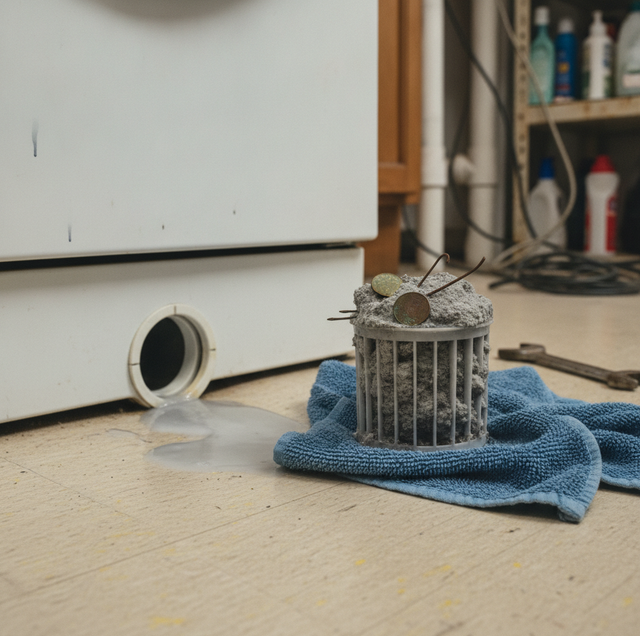
The first suspect is the drain pump filter, also called a coin trap. It sits in the flow path specifically to catch the small hard things that wash out of pockets: coins, buttons, hairpins, and the wads of lint and hair that build up over months. Catch enough of it, and the trap chokes the flow to a trickle or stops it cold. On many machines, a stray sock slips past the drum seal and lands right in the pump area, which will block drainage on its own.
Next is the drain hose. The ribbed hose running from the back of the washer can kink where the machine sits close to the wall, sag into a low loop that traps water, or clog internally with the same lint and detergent sludge that coats the filter. Any of those slows or stops the drain even when the pump is working perfectly.
The standpipe matters too. If the hose is pushed too far down into the standpipe, it can form a seal and siphon, which confuses the drain cycle and pulls water back. And if the house drain the standpipe feeds is itself blocked, the washer has nowhere to send its water. A quick tell: when water backs up and rises out of the standpipe during the drain, the blockage is in your home plumbing, not inside the washer.
The Pump and Motor Causes
Sometimes the path is clear, and the pump itself is the problem. Debris can wedge into the impeller, the small finned wheel that flings water through the pump, and seize it so it cannot turn. In other cases, the pump motor wears out and stops running at all. Either way, the water has nothing driving it out of the tub.
There is a useful clue here. A pump that hums or buzzes but never moves water is getting electrical power while something stops the impeller from spinning, so it sits there vibrating. A pump that is silent during the drain phase is likely dead or not getting power. That difference points a technician toward clearing the trap versus replacing the part.
Further back sit the parts that a homeowner should leave alone. A worn drive belt or a failing drive motor can keep the drum from turning even when draining is fine. A control board or wiring fault can drop the signal that tells the pump to run. These are diagnosis-and-parts jobs, not five-minute checks.
The Lid Switch and Door Lock
Washers are built not to run their drain and spin with the lid up, or the door unlatched, for the obvious safety reason. A top-loader uses a lid switch, and a front-loader uses a door lock, to confirm the machine is closed before it energizes the drain and spin. When that switch or lock fails, the control reads the machine as open even though it is shut, and it holds the cycle rather than draining into a possibly open drum. A front-loader that stops mid-cycle with a locked-looking door and a tub full of water is often telling you the lock, not the pump, is the fault.
Not Draining Versus Not Spinning Versus Draining Slowly
These three complaints get mixed up, and telling them apart saves you from chasing the wrong part.
Not draining means the water stays in the tub. That points at the drain side: the filter, the hose, the standpipe, or the pump. Not spinning means the water leaves normally, but the clothes come out heavy and dripping because the drum never got up to extraction speed. That points at the spin side: a lid switch or lock, a drive belt, or the motor. Draining slowly, where the water leaves but takes far longer than it should, usually means a partial clog, a filter that is halfway packed, or a hose starting to sludge up, rather than a total failure. Watch which of the three your machine is actually doing before you open anything.
What You Can Safely Check Yourself
A few checks are well within homeowner range, and they clear a large share of no-drain cases. Before anything else, unplug the washer. You will be working near standing water, and standing water plus a plugged-in appliance is exactly the mix to respect. Never reach into a machine that is running.
Start with the drain hose. Pull the washer out enough to see the hose, straighten any kinks, lift it out of any low sagging loops, and check that it is not jammed too far down the standpipe. Confirm the standpipe itself drains by pouring a little water down it.
Then clean the pump filter. On most front-loaders, it lives behind a small access door at the lower front of the cabinet. Have towels down and a shallow pan ready, open it slowly, and clear whatever lint, coins, or debris you find in the trap. Reseat it snugly so it does not leak.
If the tub still holds water after the hose and filter are clear, stop there. That is the point where the problem is likely the pump, the lid switch or door lock, the belt, the motor, or the control board, and those are the calls to hand to a technician rather than push further.
When To Bring In a Technician
Clearing a clog and straightening a hose are fair game at home. Replacing a drain pump, a lid switch or door lock, a drive belt, a motor, or a control board is not only because it requires opening the cabinet and working around wiring, but also because an incorrect diagnosis wastes a part. If you have unplugged the machine, cleared the filter and hose, confirmed the standpipe drains, and the tub still will not empty, the washer has told you it needs help with meters and parts. That is the moment to book a repair rather than keep guessing.
Frequently Asked Questions
On most front-loaders, the filter sits behind a small panel at the lower front of the cabinet, often with a short drain hose or a screw-out cap beside it. Open it over towels with a shallow pan under it, because a cup or two of trapped water pours out as you loosen the cap. Once it stops, pull out the lint, coins, and any debris caught in the trap, rinse the filter, and thread it back in firmly so it seals.
A hum with no draining means the pump is getting power, but its impeller is not turning. Usually, debris has jammed the impeller, or the pump motor has seized, so it buzzes in place without moving any water. The fix is either clearing whatever is wedged in the trap and impeller or replacing the pump if the motor itself has failed.
Yes. Excess detergent, whether too much HE formula or the wrong non-HE type, whips up more suds than the machine can handle and creates a suds-lock. Some washers detect the heavy foam and pause, adding extra rinse cycles or halting the drain until the suds break down. Measuring to the fill line and using HE detergent in an HE machine keeps this from happening.
The control board will not start the drain or spin until the door lock signals that the door is confirmed shut. If the lock fails, the machine reads the door as open even when it is closed and latched, so it stops the cycle for safety rather than draining. A failed lock ends up looking a lot like a drain problem, which is why a technician checks it when the tub sits full behind a door that seems shut.
Check both, because either can be the culprit. A kink or a lint clog in the washer's own drain hose is very common and easy to spot once you pull the machine out. The standpipe itself needs an air gap and a minimum height, roughly 30 to 36 inches, or the washer siphons its own water back out as it fills. If water rises and overflows the standpipe during the drain, the house drain line is clogged and needs snaking, not the washer.
Deal with the standing water first, because opening the filter door on a full machine dumps several gallons onto the floor. With the power off, lower the drain hose end into a bucket set below the level of the drum, and gravity siphons most of the water out for you. If the hose won't cooperate, bail the tub down by hand until it is low. Only then, crack the filter door open, with a shallow tray and towels ready for the last of it.
Book a washer diagnosis today — get an honest fix instead of another load of soaked laundry. True Appliance Services Inc. serves Maryville, Alcoa, and Knoxville. Call (865) 205-8717.
